




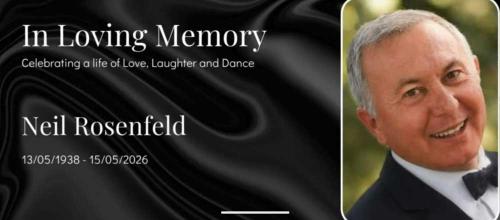
Neil Rosenfeld OAM
Our DanceSport community is deeply saddened after the passing of Neil Rosenfeld.
Neil was a true legend and one of the greatest leaders our industry has ever produced. He was a mentor to a generation of competitors, coaches, adjudicators, scrutineers and studio proprietors.
DanceSport Australia is truly honoured to share the following memoir presented at Neil's funeral and DanceSport Australia is deeply grateful to Neil's daughter, Kellie for providing us with this information. We send our sincere condolences to Neil's family and friends.
Announcement - Neil Rosenfeld OAM
On Monday 8 June 2026, it was announced that Neil had been awarded the Medal of the Order of Australia — one of the nation’s highest honours. This was in recognition of a lifetime dedicated to Australian dance and the countless lives he influenced through teaching, mentoring and service to the industry.
It was a fitting tribute to a man whose passion, generosity and contribution shaped generations of Australian dancers. We congratulate Neil on this outstanding achievement. It is reassuring to know that Neil was aware of this award, although he couldn’t speak about it, prior to passing.
Neil’s Life Story
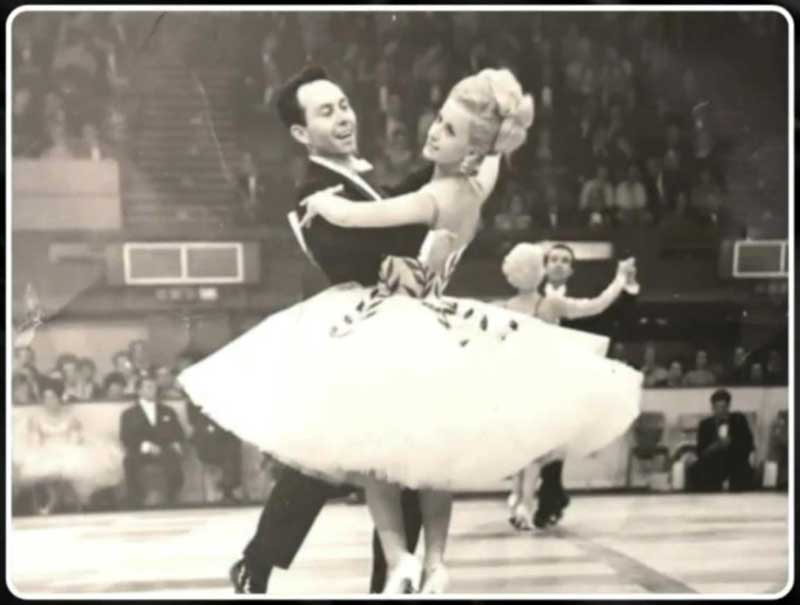
Neil Rosenfeld lived an extraordinary life defined by passion, determination, generosity, humour, resilience, and an unwavering dedication to the art of dance.
Born on the 13th of May 1938 in Brunswick, Neil grew up as an only child to Dulcie and Fred in humble beginnings. Although his mother first introduced him to dancing as a teenager, Neil didn’t take his first formal dance lesson until he was sixteen years old. He later joked that he constantly tripped over Dulcie’s feet, but even then there was clearly a natural flair for dancing.
Neil attended Brunswick Tech School, where he excelled academically and topped his class in every subject. After leaving school at just 15, he began an apprenticeship in sign writing, specialising in gold leaf. He was awarded Apprentice of the Year in 1956 — an early sign of the determination and work ethic that would define his entire life.
As a teenager, Neil was talented in many pursuits. During his high school years he practised judo and also enjoyed wrestling, football, swimming and table tennis. At eighteen years of age he completed his National Service in the Navy, an experience that further shaped his discipline, resilience and strong sense of commitment.
But it was dance that truly captured his heart and ultimately shaped the course of his life.
Shortly after his sixteenth birthday in 1954, a mate from work suggested he try dancing in Northcote. Neil bought five half-hour lessons for ten shillings — one dollar in today’s terms — at John Stretton’s studio in Brunswick. Before he had even completed the fifth lesson, his teacher invited him onto the amateur staff to help teach beginners in return for two hours of tuition every Sunday. That was the beginning of a lifelong journey.
Neil quickly became known for his insatiable curiosity. He never simply wanted to know how something was done — he wanted to understand why. That thirst for knowledge became one of the defining traits of his life.
After about eighteen months of training, his teacher told him he needed to leave the studio. Dumbfounded, Neil asked, “What have I done?” Stretton replied, “You’re a pain in the butt, you ask too many questions. I can earn the same money teaching someone who is half the trouble!”
At the time Neil was shocked and hurt, but years later he realised that his determination to understand every detail was not a flaw — it was one of the reasons he became so successful and respected throughout the dance world.
Neil went on to study under the renowned Norma Perugia in Collins Street, where his competitive career truly began to flourish. Ballroom dancing in the 1950s was woven into Australian social life, with packed dance halls and competitions almost every night of the week. Neil immersed himself completely.
In 1959 he competed in his first Australian Championship — with more than 120 couples on the floor — and won both the Jive and Cha Cha events. In 1960, dancing with Lynette Downs, he won the first ever Australian Open Latin Amateur title.
Then, in 1962, Neil met Jenny.
Together they formed one of Australia’s most successful ballroom partnerships. They married in 1964 and shared not only a love of dance, but a willingness to sacrifice everything in pursuit of excellence.
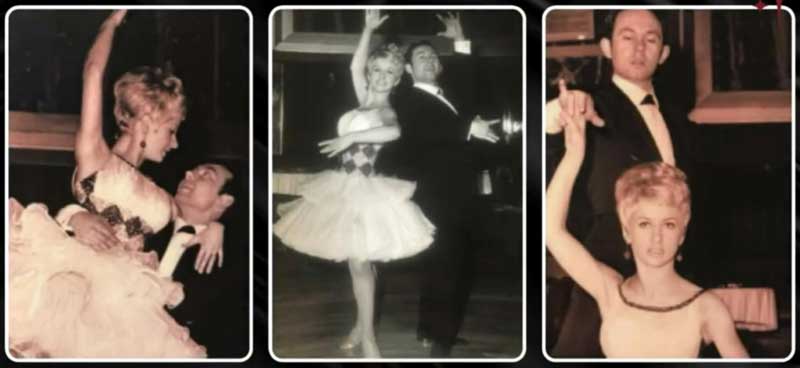
In 1966, with very little money but enormous determination, Neil and Jenny travelled by ship to England to further their dancing careers. Neil delayed the trip for some time because of concern for his beloved mother, whose health had deteriorated badly with kidney disease. After encouragement from her doctor, they finally left for England — sadly, it would be the last time Neil saw his mother, whom he lovingly described as “a gentle soul.”
Life in London was far from glamorous. Neil and Jenny lived frugally, often choosing to pay for lessons rather than food. They worked full-time jobs during the day and practised late into the night. Neil worked as a sign writer while Jenny worked as a secretary. They lived in tiny rooms, shared bathrooms with multiple families, and endured exhausting schedules — yet they embraced every opportunity to learn.
Their teachers included some of the greatest names in world ballroom dancing: Len Scrivener, Wally Laird, Bill Irvine, Sonny Binnick and Nina Hunt.
Neil often said that the journey mattered more than comfort. In England, lessons cost five pounds an hour — a fortune at the time — but he and Jenny believed knowledge was worth every sacrifice.
Their hard work paid off with remarkable international success, including reaching the finals of both the World and International Amateur Latin Championships in 1967, placing fifth in each event, along with fifth in the World Modern Championships, ninth in the British Latin Championships, and winners of the prestigious London Cup Modern Championship.
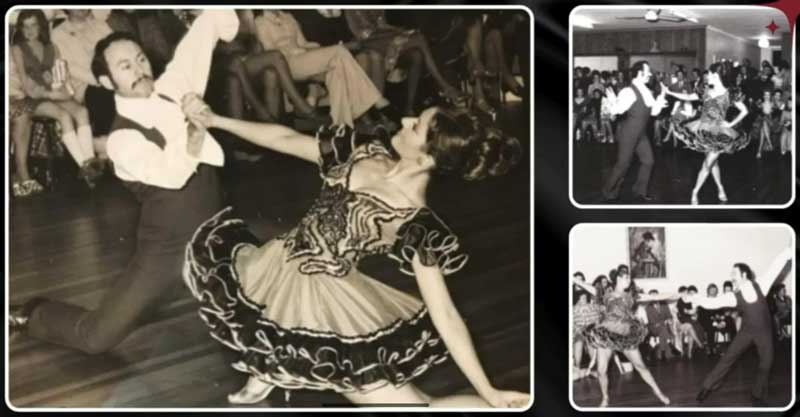
After winning the London Cup in 1967, they turned professional.
They returned to Australia in 1968 with virtually no money to their names — but with a wealth of knowledge and experience that would transform Australian ballroom dancing.
That same year, they won the Australian Professional Modern and Latin Championships. Neil would go on to become Australian Professional Latin Champion for four consecutive years from 1968 to 1971, firmly establishing himself as one of Australia’s great dance champions.
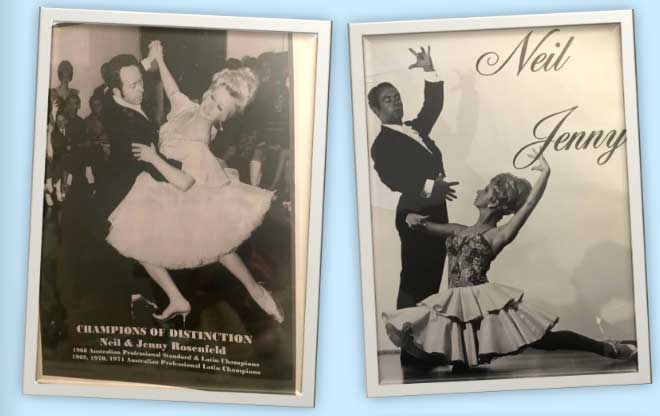
Yet despite all the titles and accolades, Neil never believed life was simply about winning.
After becoming champion, he later reflected on lying awake and thinking, “What’s it all about?” Over time he realised the answer was not the trophies themselves, but the journey — the learning, the friendships, the experiences, and the people met along the way.
In 1970, Neil and Jenny opened Granada Dance Centre in Malvern. They financed the studio by travelling to New Zealand and teaching ten hours a day for weeks at a time until they had enough money to make their dream possible.
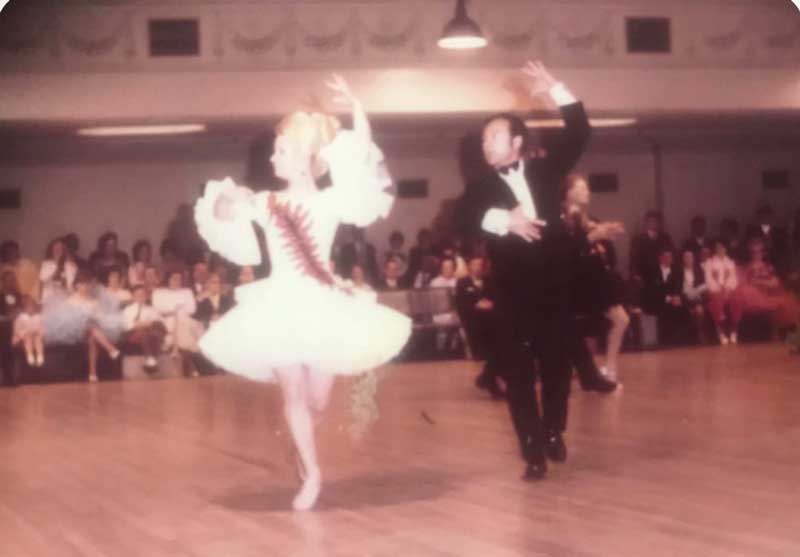
Granada became far more than just a dance studio. Over more than three decades, it became one of Australia’s most respected and influential centres for ballroom dancing.
Teaching was undoubtedly Neil’s true calling. Students relocated from across Australia to train under him, drawn not only by his immense knowledge and international experience, but by the generosity, passion and encouragement he brought to every lesson. He had the rare ability to make every student feel valued.
Neil devoted more than fifty years to the dance industry as a competitor, coach, lecturer, examiner, adjudicator, organiser, compere and mentor.
His legacy as a teacher is immeasurable. He mentored and trained many of today’s adjudicators, coaches and studio proprietors, shaping the very fabric of the Australian dance community. He encouraged generations of dancers to keep learning, to keep questioning, and to never stop wanting to “know more, how and why.”
Neil was widely regarded as one of the most influential figures in the history of the Australian Dancing Society. The ADS was not simply an organisation to Neil — it was one of the great passions of his life.
Alongside Bob Courts, Neil played a major role in moving the Australian Championships to The Glasshouse in 1983, helping transform the event into a world-class championship and elevating the profile of DanceSport in Australia.
Neil’s extraordinary contribution to Australian dancing was recognised with numerous prestigious honours.
In 2014 he received the DanceSport Victoria Lifetime Achievement Award and was inducted into the DanceSport Victoria Hall of Fame for Outstanding Competitive Success and Outstanding Achievements as a Coach. In 2015 he was awarded Life Membership of DanceSport Australia, followed by Life Membership of the Australian Dancing Society in 2016.
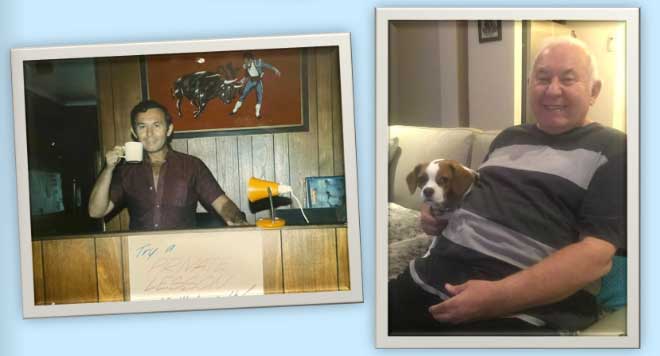
Outside of dancing, Neil embraced life with energy and enthusiasm. During the 1980s he loved houseboating, waterskiing and snow skiing, always enjoying adventure, friendship and time with family and friends.
He was also an avid runner and proudly completed the Melbourne Marathon twice during the 1980s. The second time was a further display of his competitive nature as he had to break four hours, coming in at 3 hours and 50 minutes.
Outside the dance world, Neil was immensely proud of his family.
He was a devoted father to Adam and Kellie, a loving grandfather to Shayla, Jonty, Kade and Zara, and a proud great-grandfather to Cruz and Sienna, who all brought enormous joy to his life.
Neil also treasured the many lifelong friendships formed through dance. He loved the stories, the laughter, the travel, and the incredible community that ballroom dancing created around him.
Even after retiring from adjudicating in 2005, Neil never truly left the industry he loved. He continued examining, mentoring and inspiring others for years afterwards, remaining deeply connected to the dance world. His technical knowledge was extraordinary, and he became the person everyone turned to for advice. His wisdom, standards and passion shaped generations of dancers across Australia.
In 2018 Neil moved to Koorootang Court, where he instantly bonded with the residents and before long was on the Committee, again volunteering his time to give back to the community. Neil treasured his years with this newfound second family and loved every day there, even bringing his mates Barry and John to the Rosenfeld Christmas lunch each year.
Reflecting on his life after more than fifty years in dance, Neil once wrote:
“I look back with immense pleasure at all the people I have come in contact with — to all these people I say, ‘Thanks for the memories.’”
Those words capture Neil perfectly.
A champion dancer.
A teacher.
A mentor.
A storyteller.
A friend.
An adventurer.
A family man.
Neil Rosenfeld’s life was never simply about becoming a champion.
It was about passion, courage, resilience, friendship, generosity, love, and the journey itself.
And what an extraordinary journey it was.
As we close today, we remember Neil not only as one of the great figures of Australian dancing, but as a deeply loved father, teacher, mentor, and friend.
His was a life filled with passion, purpose, elegance, commitment, and extraordinary generosity.
“Life is not measured by the number of breaths we take, but by the moments that take our breath away.” Neil helped many people find those moments on the dance floor and in life.
Until we meet again my friend – RIP Neil Rosenfeld OAM